A Player vs B Player 7 min read
many people have a definition for what the “A Player” is. so many different definitions.
I will try to make it simple: the A Players means he/she is the best person for the job.
the westem startup culture always emphasizes the importance of A Player.
while jack ma, he chooses to avoid the A Players, intentionally.
The Jack Ma way
I quote from Want to work for Jack Ma? These are the traits he looks for in a candidate:
Underpinning that success is one of Ma’s first rules in hiring: Avoid the “best” people and the “experts.”
“l hate to hire people who come as experts because there’s no experts of future, they’re always experts of yesterday,” Ma said. “There are no best people. The best people are always in your company, you train them to become best.”
And that starts with getting in people who are ready to learn and are not afraid to make mistakes, he added.
Jack Ma also had the experience that the A Players want the company to use their own way / method for working, and asked for high compensation.
so Jack Ma chooses to just hire ordinary people (but not really ordinary, of course they should have the culture fit and so on) and train them instead.
Alibaba early investment
but wait. do you know that Alibaba got $20M investment from Softbank in 2000? for the Chinese economy back then, this was a HUGE amount.
Alibaba was founded in 1999. china’s income per capita in the 2000 was around $750 – $960.
let’s just assume it’s $1000 per person per month. if Alibaba hires 15 people, it’s 15k/mo, and the other bills are $5k/mo, the monthly expense will be $20k/mo. with $20M, Alibaba can operate like for 1000 months without having any revenues before the investment dried out.
so it doesnt really matter if Alibaba hired A Players or B Players. they can still hire a lot of good employees. they will still end up successful.
Everyone has their own definition
like every guy in the startup field has different definition for “A Player.”
like Jason Lemkin.
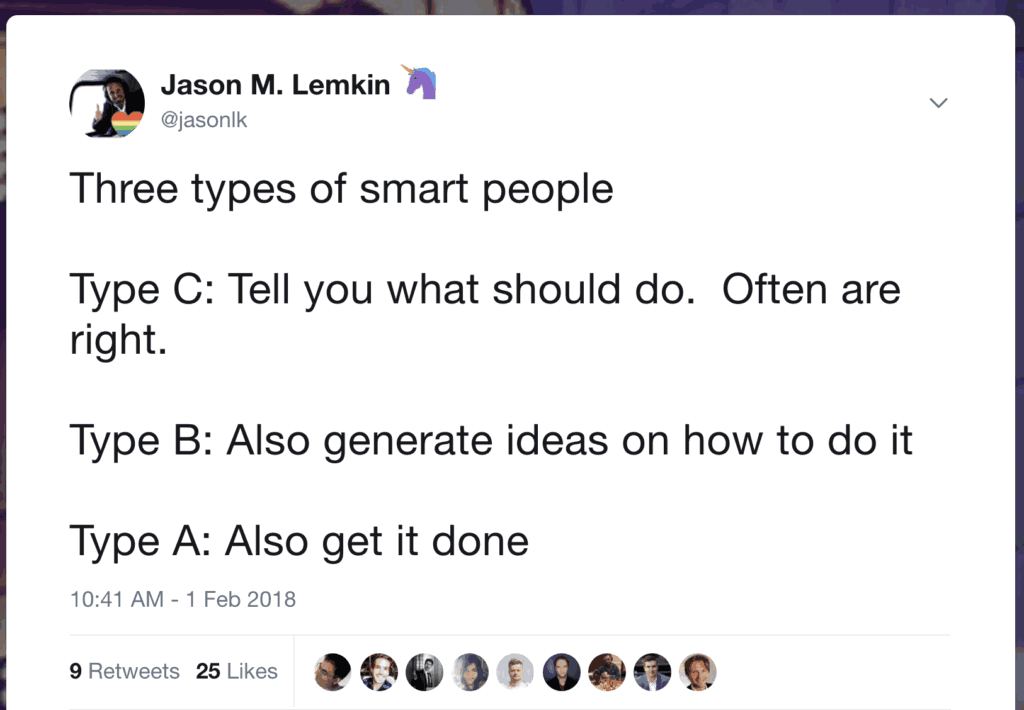
or Codie Sanchez’s high performer.
so every people have their own characteristic/definition for “A Player”.
The origin of “A-Player” thing
but where does this “A Player” thing came from?
it’s from Steve Jobs himself. this is a quote from the Isaacson’s book:
“For most things in life, the range between best and average is 30% or so. The best airplane flight, the best meal, they may be 30% better than your average one. What I saw with Woz was somebody who was fifty times better than the average engineer. He could have meetings in his head. The Mac team was an attempt to build a whole team like that, A players.
People said they wouldn’t get along, the’d hate working with each other. But I realized that A players like to work with A players, they just didn’t like working with C players. At Pixar, it was a whole company of A players. When I got back to Apple, that’s what I decided to try to do. You need to have a collaborative hiring process. When we hire someone, even if they’re going to be in marketing, I will have them talk to the design folks and the engineers.”
So, an A player according to Steve Jobs is:
- a technical who is very effective and highly productive relative to his peers;
- someone who really understands his field and is attentive to details;
- a cross-functional team player;
- someone who can get along with a proven team of A players;
- someone who doesn’t like working with C players
Tips about A-Players
2 other things that Jason Lemkin said about spotting an A Player.
- get an advisor / mentor who has done it before (worked with A Players) to interview the candidates. he/she will know.
- you will know 90 days in, or 45 days in. the A Player will be able to attract the top talent to work with them.
The Early Stage Challenge
a founder would surely want his/her startup to have a team of A Players.
1. Higher rates
but the challenge lies the early stage of startup. sometimes it’s not always possible to get the A Players early because they could asked for a high-rate compensation.
2. Envy the lower-performance workers
there is also this other challenge when you already have the B Players before the A Players:
the B Players might have a higher stock option compensation than the A Players.
not every A Players will like the fact that they will be compensated lower than someone who are working not as good as them. but if you, as a founder, can find a way to explain & overcome this problem, then hiring B Players before A Players could work as well.
3. The Job titles
then there is one other classic problem, you should be cautious not to make the mistake:
one valuable thing my company Advisor told me, is to never give too prestigious job title to the early hires.
you might be tempted to give them the title of “VP of x” or something nice because you want to appreciate them & make them happy. but it’s possible to hire someone better in the future and you want to place the new hire-and-better-new-hire above the old ones.
when you already gave flashy job title to the old hires, stripping away the job title would feel like a demotion. definitely not good for their morale.
A-Player in the earliest stage
so, do you really have to hire A-Players in the beginning?
that would depends:
- on your available budget;
- on your strategy;
- on your access to talent;
- on how good you can persuade top talent.
if you already have a solid plan, you might not need to hire an A Player.
The success rate to hire A-Players
in the end, I think there are 3 things that will greatly affect your possibility to hire A Player:
- your vision.
if you have a grandeur vision, you will be able to attract top talent more easily. nobody wants to work in a company without bright future. and definitely not A Players. - money cures all.
if you have a lot of money, from your own or from investment, this will be able to attract top talent the better, as they can get good salary. - give more equity to them.
this means your founder equity will take a hit. but you will improve your chance of success significantly.
Founder reward
regarding to point no 3 — as long as you (the founder) own the company control,
I believe you will still be able to give yourself (the founder) a rewarding equity bonus in the future — so you don’t have to worry about early “founder equity loss”.
in some cases, the value of the equity bonus you gave yourself later could be even bigger than the original shares that the founder owned.
there are so many ways which can be used to reward the founder than just the original equity.
like revenue/earning royalties. or even more bonuses. IPO equity bonus. performance based stock option. and so on. it’s the founder’s job to design the scheme.
you, as the founder, should design this scheme early, and don’t leave the handsomely reward on the table. because if you don’t design this correctly, you might not be able to get it later.
Grand vision = better chance to get A-Players
so let’s get back to this A Player thing.
so basically you’ll have much better opportunity to get A Players if you have a grand vision. this attracts great investment as well. then everything will be aligned.
but if you don’t have this grand vision,
I think you will still be able to survive with B Players,
though you will need to put more efforts and just hire the A Players later;
just make sure that the B-Players-you-will-be-hiring has all the culture-fits & the strong drive to success.